Page Not Found
Page not found.
A list of all the posts and pages found on the site. For you robots out there is an XML version available for digesting as well.
Page not found.
Paolo Di Francesco — Senior Solutions Architect at AWS in Vienna and MLflow contributor. Open-source ML tools on SageMaker, MLOps, and agentic AI.
Curriculum Vitae of Paolo Di Francesco — Senior Solutions Architect at AWS.
Career history of Paolo Di Francesco — from wireless research and cybersecurity engineering to Senior Solutions Architect at AWS, taking machine learning to production.
Open-source contributions by Paolo Di Francesco — MLflow, SageMaker Python SDK, and public AWS workshops.
Technical writing on MLOps, Generative AI, SageMaker, and cloud architecture by Paolo Di Francesco — on the AWS Machine Learning Blog and AWS Builder Center.
Academic publications by Paolo Di Francesco in IEEE, ACM, and other venues.
Conference talks, meetups, workshops, podcasts, and university teaching by Paolo Di Francesco.
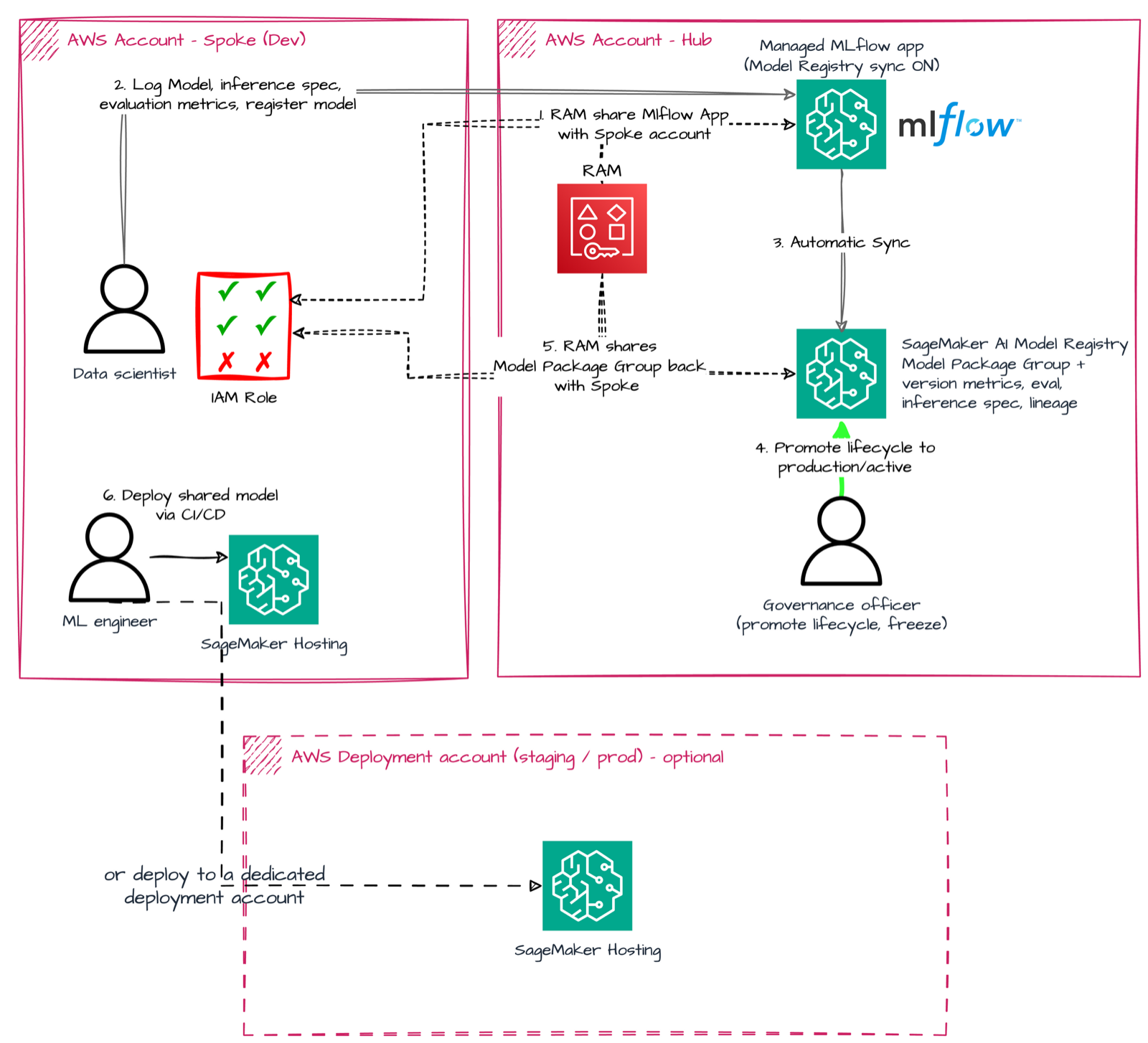
Larger organizations rarely stop at one account: they run multiple development accounts, a central governance function, and — in regulated environments — a hard rule that development workloads cannot write into production-grade accounts. In this second post, we extend the building blocks from Par...
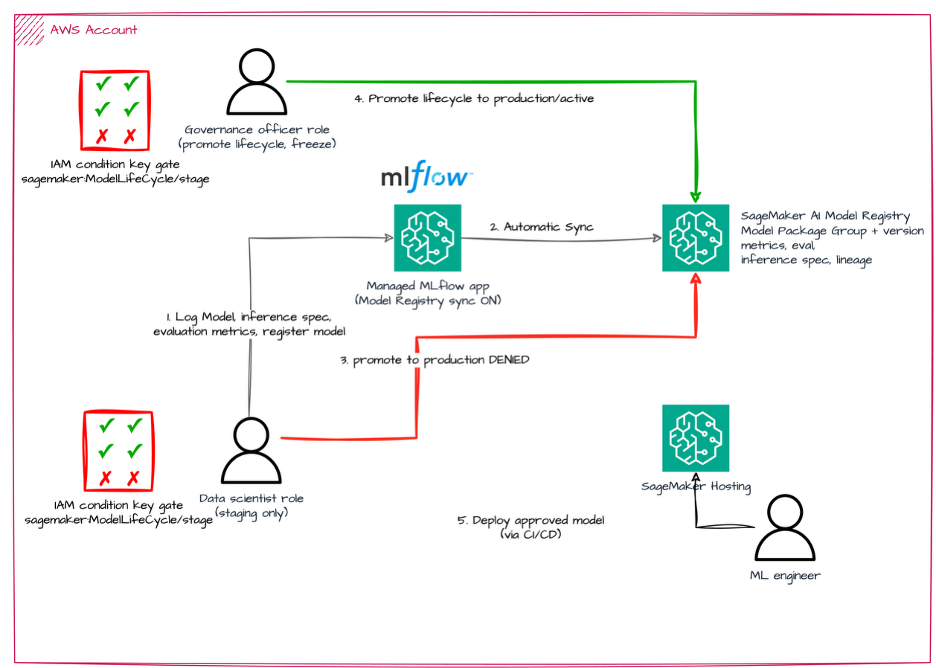
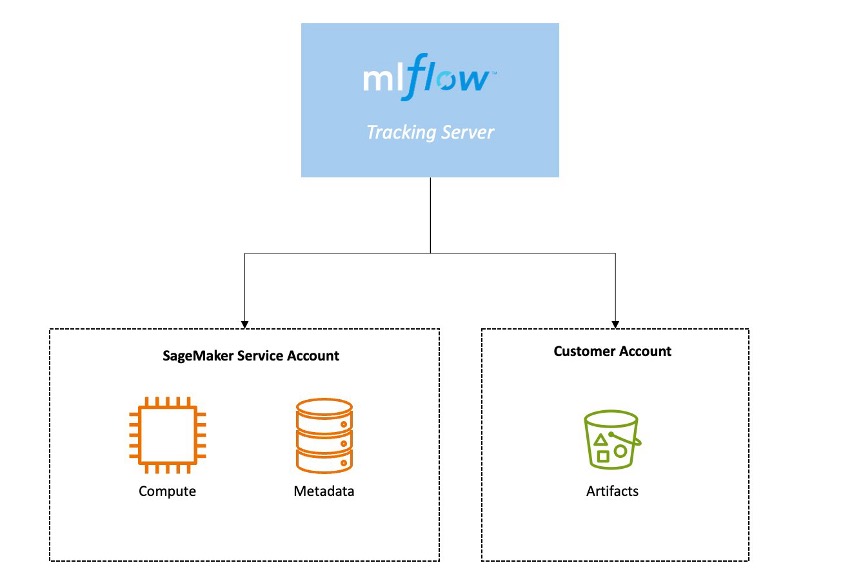
Data scientists track dozens of candidate runs in MLflow, while governance officers need one authoritative registry to validate, approve, and audit the models that reach production. Managed MLflow on Amazon SageMaker AI now closes that gap: every model registered in MLflow syncs into the SageMake...
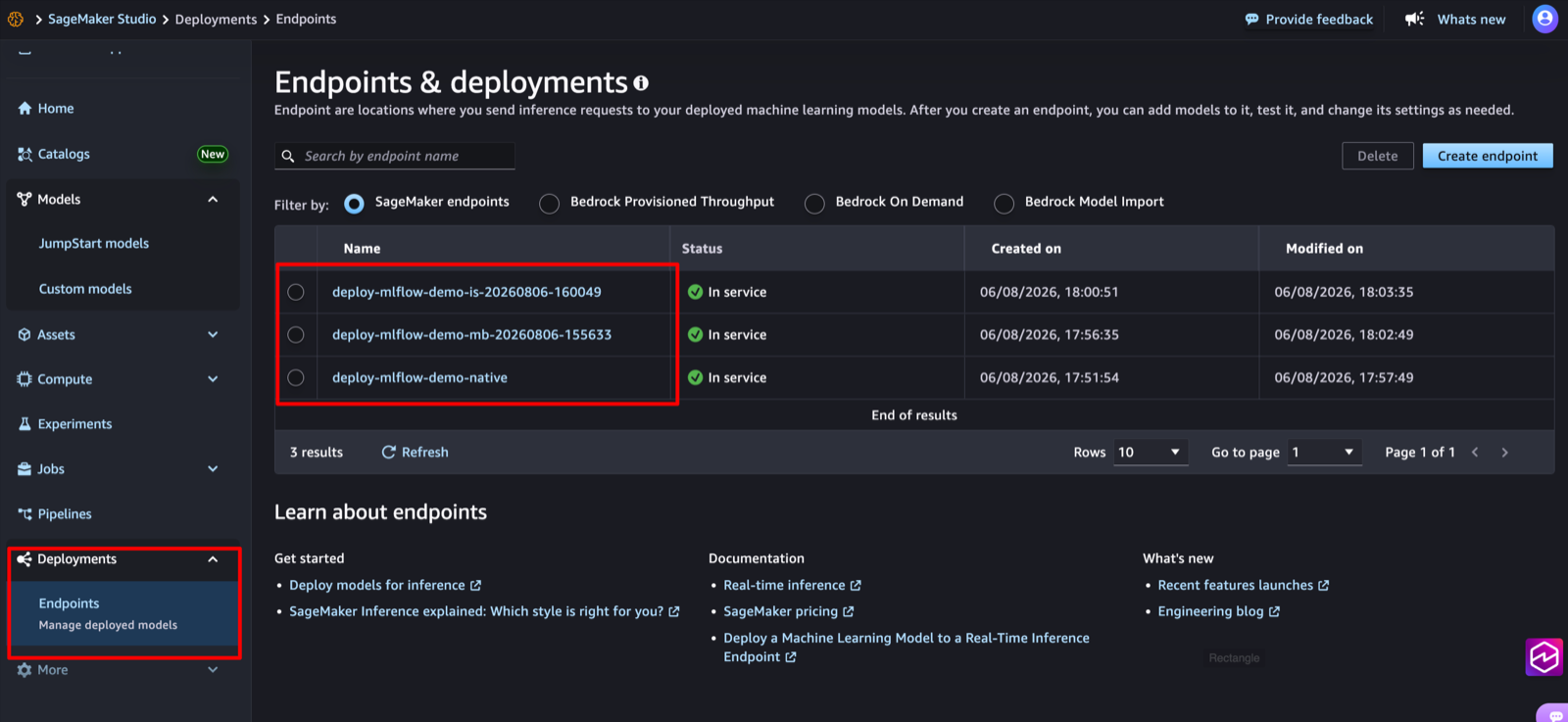
Your best model sits in the MLflow Model Registry with a version number and a signature — and then someone asks: “Can we get that behind an endpoint?” With managed MLflow on Amazon SageMaker AI, the distance between “registered in MLflow” and “serving traffic” is much shorter than it used to be. ...
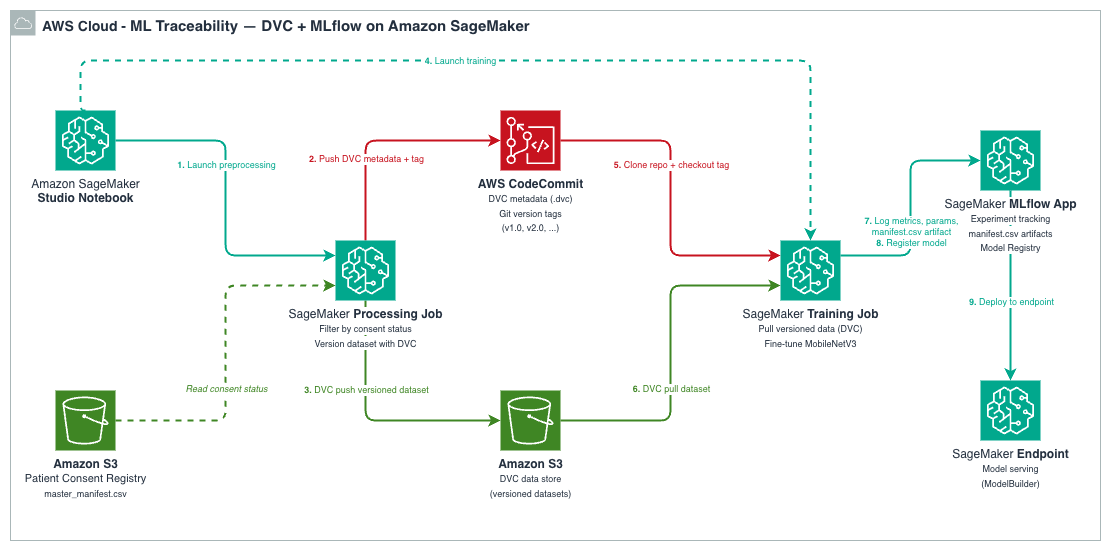
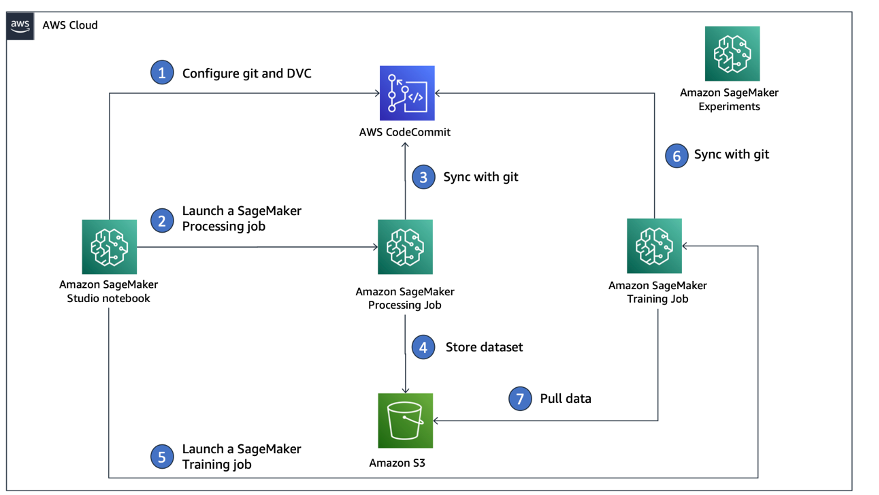
Production ML teams often struggle to trace the full lineage of a model back to the exact data and code that trained it. In this post, we close that gap by combining DVC for data versioning, Amazon SageMaker AI for scalable processing and training, and Amazon SageMaker AI MLflow Apps for experime...
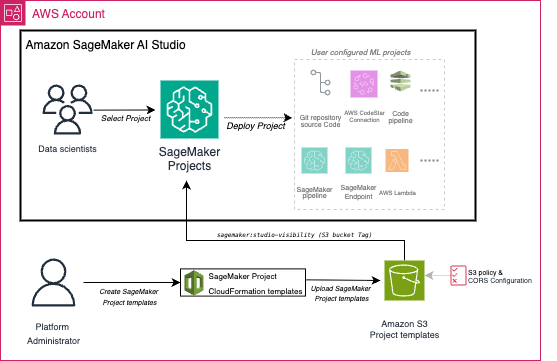
Managing ModelOps workflows can be complex and time-consuming. Amazon SageMaker AI Projects now offers an easier path with Amazon S3-based templates. With this new capability, you can store AWS CloudFormation templates directly in Amazon S3 and manage their entire lifecycle using familiar S3 feat...
In this post, we show how to use FMEval and Amazon SageMaker to programmatically evaluate LLMs. FMEval is an open source LLM evaluation library, designed to provide data scientists and machine learning (ML) engineers with a code-first experience to evaluate LLMs for various aspects, including acc...
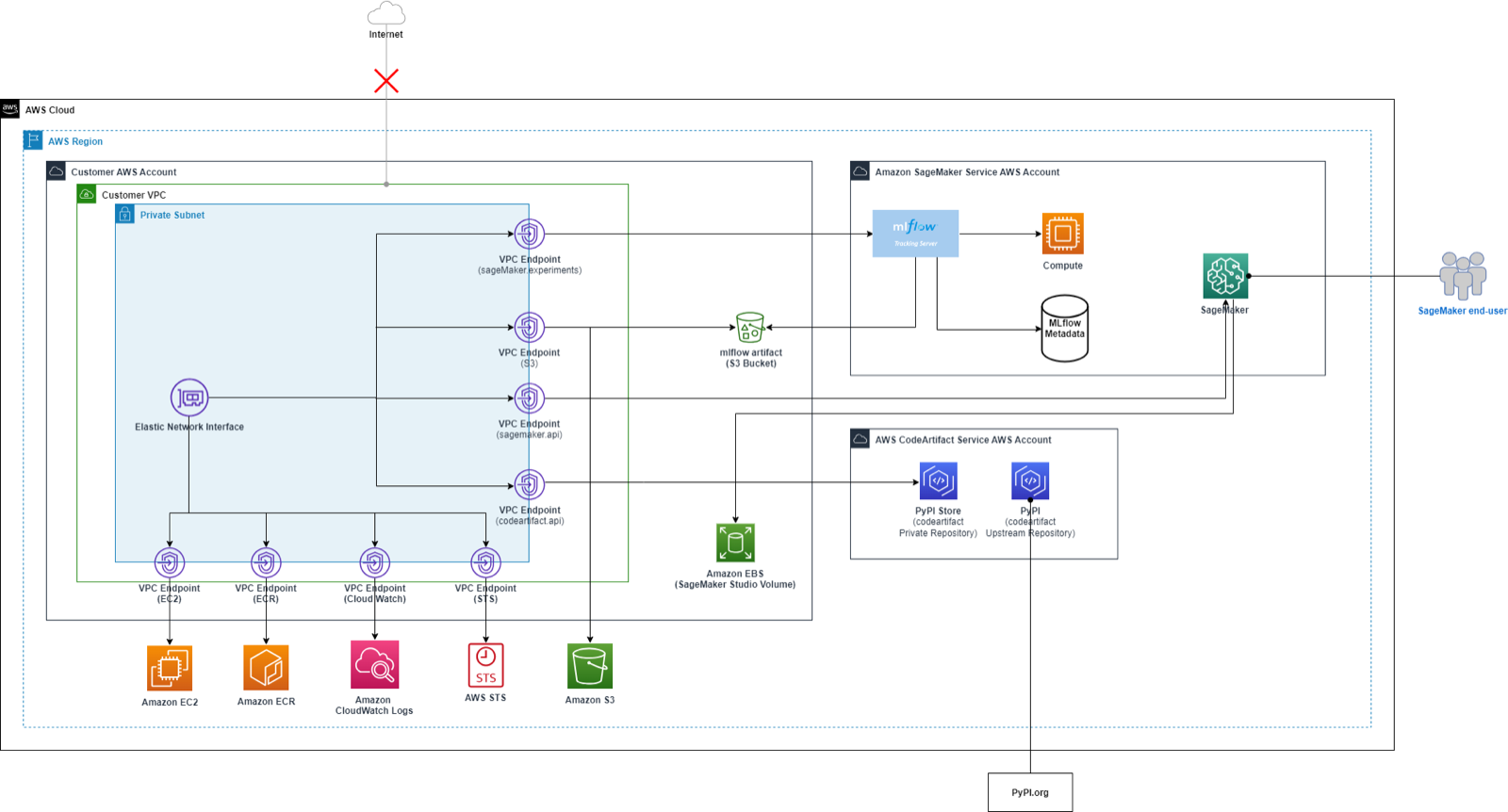
Regulated environments don’t get to choose between experiment tracking and network isolation — they need both. With AWS PrivateLink support for Amazon SageMaker with MLflow, data sent to MLflow Tracking Servers stays inside the AWS network, never touching the public internet. In this post, we go ...
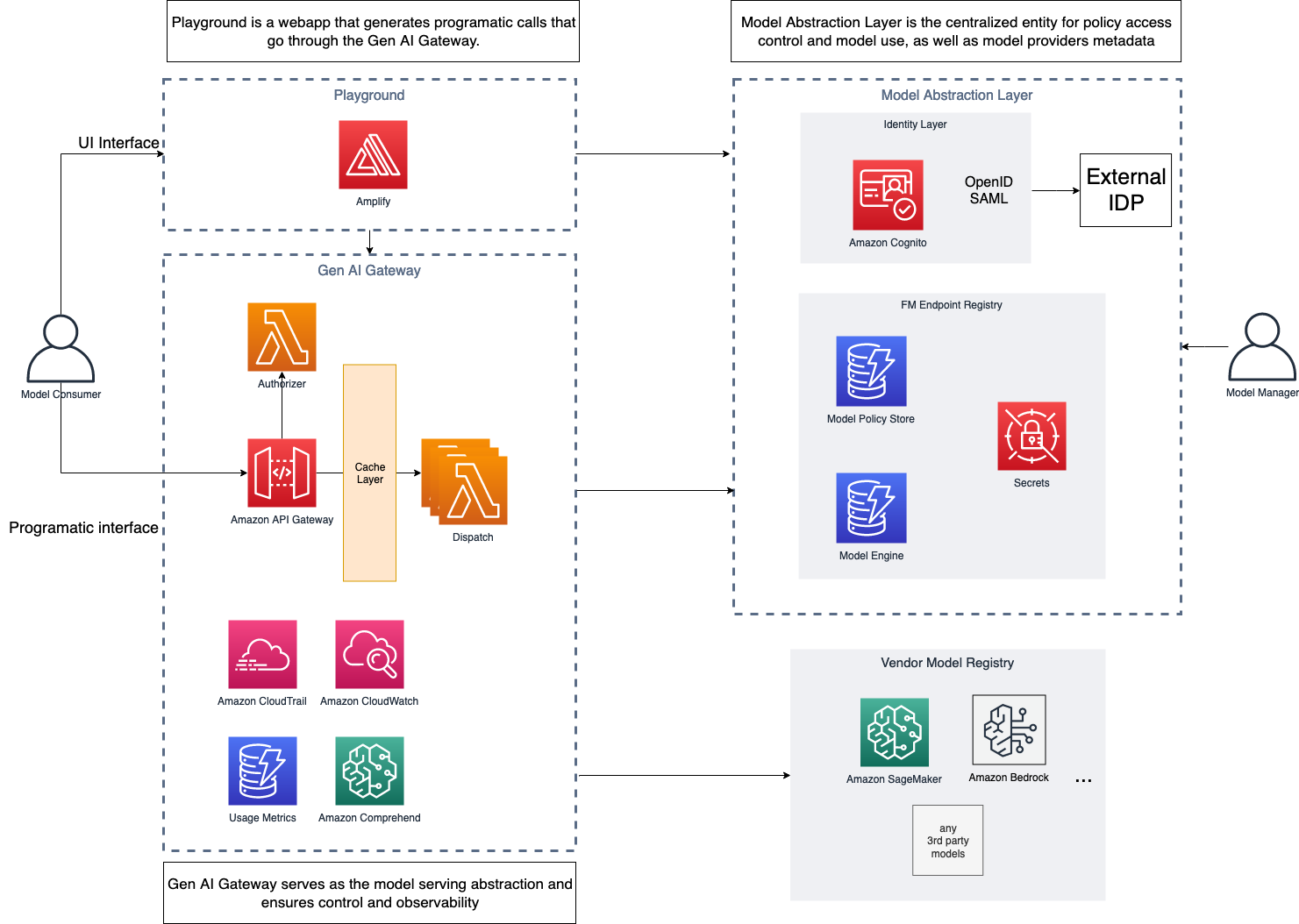
Every team in the enterprise wants to try foundation models. Nobody wants ten teams each wiring up their own model access, cost tracking, and compliance controls — and the security office wants that even less. In this post, we propose a Generative AI Gateway: one governed entry point through whic...
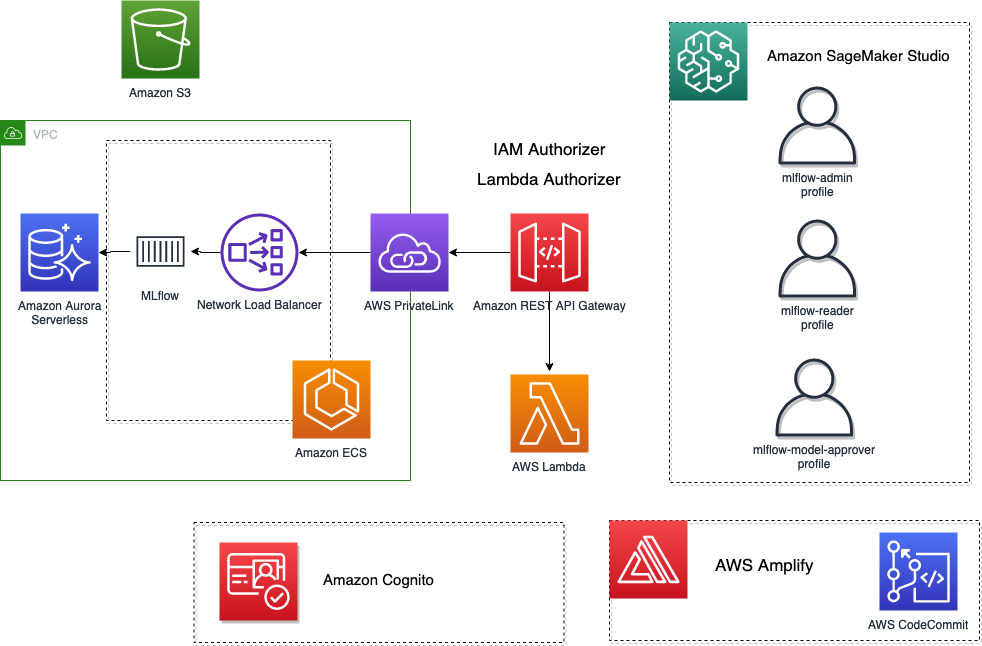
Open-source MLflow has no access control out of the box — anyone who can reach the tracking server can read and write everything. That’s fine on a laptop and a problem in an enterprise. In this post, we show how to run MLflow on serverless AWS infrastructure and put real authentication in front o...
The process of building a machine learning (ML) model is iterative until you find the candidate model that is performing well and is ready to be deployed. As data scientists iterate through that process, they need a reliable method to easily track experiments to understand how each model version ...
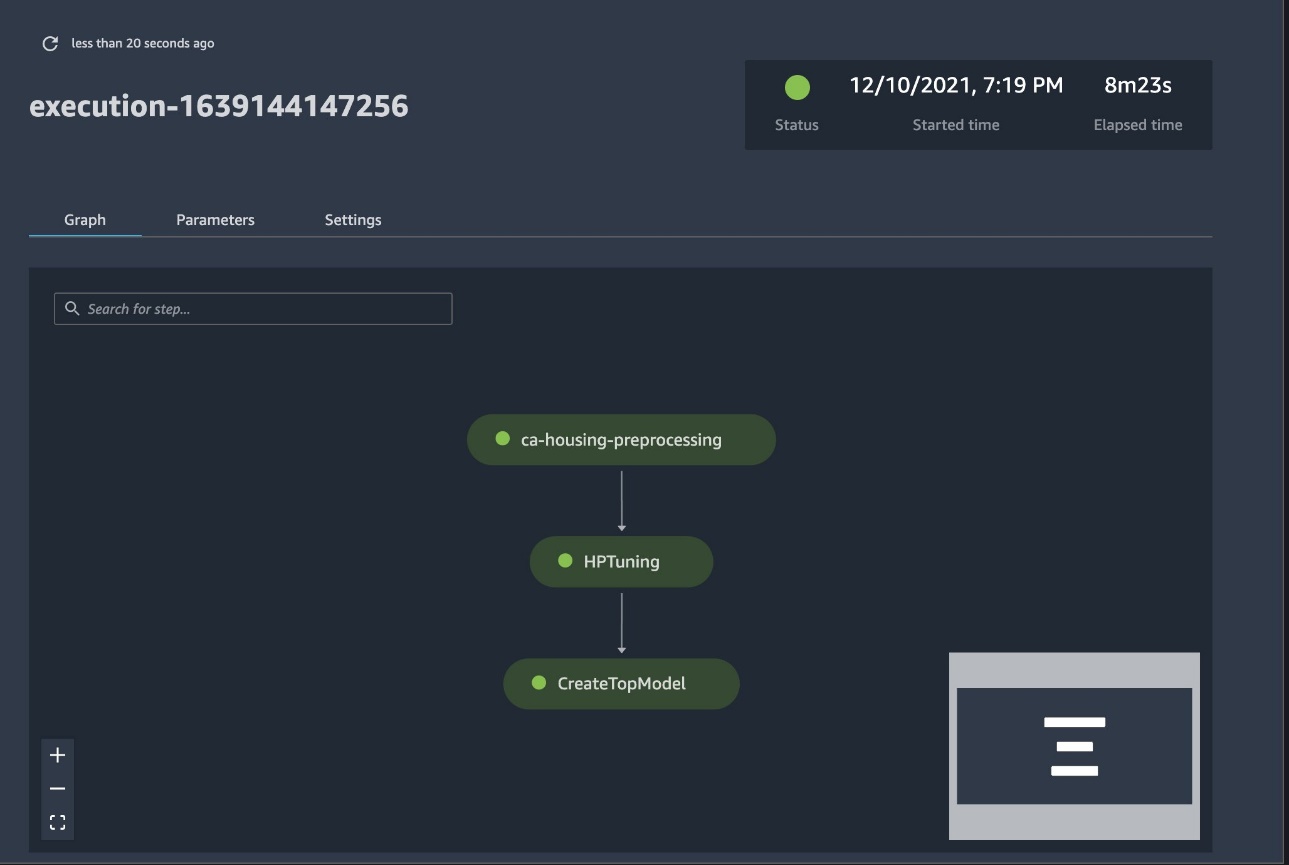
Data scientists often work towards understanding the effects of various data preprocessing and feature engineering strategies in combination with different model architectures and hyperparameters. Doing so requires you to cover large parameter spaces iteratively, and it can be overwhelming to kee...
J.C. O'Sullivan, P. Di Francesco, U.K. Anyanwu, L.A. DaSilva, and A.B. MacKenzie. 2011. "Multi-hop MAC Implementations for Affordable SDR Hardware." IEEE DySPAN, Aachen, Germany, pp. 632-636.
This paper presents the implementation and experimental evaluation of a MAC protocol designed to overcome some of the limitations of affordable and widely-deployed software defined radio hardware. We propose a modified Aloha-based MAC protocol with implicit acknowledgements to mitigate the impact...
Y. Xiao, Y. Chau, P. Di Francesco, and L.A. DaSilva. 2013. "Dynamic Spectrum Scheduling for Carrier Aggregation: A Game Theoretic Approach." IEEE ICC, Budapest, Hungary, pp. 2672-2676.
This paper addresses the problem of dynamic spectrum scheduling for carrier aggregation in heterogeneous wireless networks using a game-theoretic approach. We formulate the spectrum scheduling problem as a non-cooperative game among base stations and propose an algorithm to reach a Nash equilibri...
L.A. DaSilva, J. Kibiłda, P. Di Francesco, T.K. Forde, and L.E. Doyle. 2013. "Customized Services over Virtual Wireless Networks: The Path towards Networks without Borders." Future Network and MobileSummit, Lisbon, Portugal.
Wireless networks of the future will be characterised by heterogeneity of spectrum usage regimes, of resource ownership models, and of radio access technologies. In these networks, resources will be orchestrated to create bespoke virtual networks designed to best meet the needs of specific services.
P. Di Francesco, S. McGettrick, U.K. Anyanwu, J.C. O'Sullivan, A.B. MacKenzie, and L.A. DaSilva. 2013. "A Split Architecture for Random Access MAC for SDR Platforms." CROWNCOM, Washington, DC.
Implementation of carrier-sensing-based medium access control (MAC) protocols on inexpensive reconfigurable radio platforms has proven challenging due to long and unpredictable delays associated with both signal processing on a general purpose processor (GPP) and the interface between the RF fron...
A. Puschmann, P. Di Francesco, M.A. Kalil, L.A. DaSilva, and A. Mitschele-Thiel. 2013. "Enhancing the Performance of Random Access MAC Protocols for Low-cost SDRs." ACM WiNTECH, Miami, FL.
Software Defined Radio (SDR) is a technology which facilitates experimentation and the practical realization of novel wireless communication systems. Especially low-cost SDRs, however, experience high communication delays due to the connection between the radio hardware and the host computer. Thi...
P. Di Francesco, F. Malandrino, and L.A. DaSilva. 2014. "Mobile Network Sharing Between Operators: A Demand Trace-Driven Study." ACM SIGCOMM CSWS, Chicago, IL, pp. 39-44.
We assess, through real-world demand and deployment traces, how sharing can improve the efficiency of present-day cellular networks, especially in rural areas. We examine the main challenges and opportunities of infrastructure sharing and evaluate the potential gains from different sharing config...
P. Di Francesco, S. McGettrick, U.K. Anyanwu, A.B. MacKenzie, and L.A. DaSilva. 2015. "A Split MAC Approach for SDR Platforms." IEEE Transactions on Computers 64(4): 912-924. doi: 10.1109/TC.2014.2308197
Implementation of carrier sensing-based medium access control (MAC) protocols on inexpensive reconfigurable radio platforms has proven challenging due to long and unpredictable delays associated with both signal processing on a general purpose processor (GPP) and the interface between the radio f...
J. Kibiłda, P. Di Francesco, F. Malandrino, and L.A. DaSilva. 2015. "Infrastructure and Spectrum Sharing Trade-offs in Mobile Networks." IEEE DySPAN, Stockholm, Sweden.
This paper investigates the trade-offs between infrastructure sharing and spectrum sharing in mobile networks. Using real-world deployment and demand data, we analyze how different sharing configurations impact network capacity, cost efficiency, and competition among mobile network operators.
P. Di Francesco, F. Malandrino, T. Forde, and L.A. DaSilva. 2018. "A Sharing and Competition Aware Framework for Cellular Network Evolution Planning." IEEE Transactions on Cognitive Communications and Networking 1(4): 464 - 470. doi:10.1109/TCCN.2017.2663060
Mobile network operators are facing the difficult task of significantly increasing capacity to meet projected demand while keeping CAPEX and OPEX down. We argue that infrastructure sharing is a key consideration in operators’ planning of the evolution of their networks, and that such planning can...
P. Di Francesco, F. Malandrino, and L.A. DaSilva. 2017. "Sensitivity Analysis on Service-Driven Network Planning." IEEE/ACM Transactions on Networking 25(3): 1417 - 1430. doi: 10.1109/TNET.2016.2633417
Service providers are expected to play an increasingly central role in the mobile market and their relationship with the traditional mobile network operators (MNOs) is starting to change. The dilemma faced by over-the-top service-providers (OTTs) is now whether to enter into a service level agree...
P. Di Francesco, F. Malandrino, and L.A. DaSilva. 2018. "Assembling and Using a Cellular Dataset for Mobile Network Analysis and Planning." IEEE Transactions on Big Data 4(4): 614 - 620. doi:10.1109/TBDATA.2017.2734100
In a world of open data and large-scale measurements, it is often feasible to obtain a real-world trace to fit to one’s research problem. Feasible, however, does not imply simple. Taking next-generation cellular network planning as a case study, in this paper we describe a large-scale dataset, co...
Organized and hosted the first AWS Vienna Meetup at the AWS Vienna office, presenting on MLflow integration with Amazon SageMaker and open-source ML tooling on AWS. The event reached full capacity with 35 attendees.
Recorded a 40-minute podcast episode on MLOps with Alex Casalboni for the official AWS Italy Podcast, discussing automation strategies for machine learning workflows, SageMaker Pipelines, experiment tracking, and best practices for production ML systems.
Delivered an MLOps session as part of the Italian-language track at AWS Innovate, covering end-to-end machine learning workflows on Amazon SageMaker. Also participated in an Ask The Expert panel and live Q&A session. Approximately 200 attendees.
Delivered two hands-on AWS DeepRacer workshop sessions (theory and practice) at AWS Summit Milan, covering reinforcement learning fundamentals and autonomous racing. Both sessions were at full capacity with 30+ attendees each. Delivered in Italian.
Presented on foundation model hosting options and demonstrated a Retrieval-Augmented Generation (RAG) application at the Vienna Data Science Tools Meetup, with approximately 60 attendees from the local data science community.
This talk presented a comprehensive overview of MLOps on AWS, covering the journey from experimental notebooks to production-ready ML systems using Amazon SageMaker. Starting from the premise that ML code is only a small fraction of a real-world ML system, the session walked through an MLOps matu...
Presented LLMOps and FMOps concepts to approximately 100 attendees at an AWS builder-focused event, covering the operational lifecycle of large language models including fine-tuning, evaluation, deployment, and monitoring strategies.
Co-presented with Ankit Anand and Matt Nightingale, this session explored the challenges of training foundation models at scale and how Amazon SageMaker HyperPod addresses them. The talk covered the generative AI landscape and the growing computational demands of FM development, from prompt engin...
Presented a 30-minute session on Generative AI lifecycle tooling to an audience of approximately 200 attendees at a cloud computing conference. Covered the end-to-end lifecycle of foundation models, from experimentation and evaluation to deployment and monitoring, using AWS services. The session ...
How do you turn a two-week, multi-account infrastructure runbook into a one-hour conversation? This session presented a re-imagined developer portal experience built on Strands Agents SOPs: architecture decisions, security constraints, and deployment steps codified once as machine-readable runboo...